A pre-match note for the 3rd ODI between India and England at Lord's on July 19, 2026 — pitch, toss and dew read, confirmed playing XI signals and the fantasy XI call for Betwinner operators before teams lock.

· Betwinner News Desk · Cricket News
The 3rd ODI at Lord's on July 19, 2026 is a series decider in India's tour of England — the side that wins takes the ODI leg of the tour outright, the side that loses flies home with a drawn series and a long flight to think about it. For Betwinner operators the appeal is the same as it has been for the last ten Lord's ODIs between these two sides: the contest goes live with a one-hour build-up window before the toss, the player card range is the largest it gets on the international calendar outside World Cup knockouts, and the contest variety stretches from Rs 10 head-to-heads to high-stakes mega contests with 50,000-plus entries.
The Lord's surface is also the most over-pitched venue in world cricket, which means the fantasy math resolves faster than at any other ODI ground on the England calendar. Within 6 overs of the first innings you can usually tell whether the pitch is a 280-plus batting track or a 220-paradise for the bowlers, and the captain pick is much easier to read once the first ten overs are done. The trick for fantasy operators is to wait for those first ten overs before locking in any contest that has a captain-swap window, and to commit a paid mega contest team only after the dew read is clear from the second-innings powerplay.
The contest variety for this fixture is worth understanding before you build a team. Betwinner typically opens a free-entry qualifier contest roughly 12 hours before the toss for first-time operators (no deposit match required for the standard sign-up flow), standard mega contests with a single-entry cap, head-to-heads priced from Rs 50 to Rs 50,000, and a cluster contest where 3-11 operators share the same prize pool against identical player cards. For a Lord's series decider the cluster contests tend to pay the best because they reward read accuracy over entry volume — a single high-conviction team in a cluster can finish in the top 10% if your captain hits.
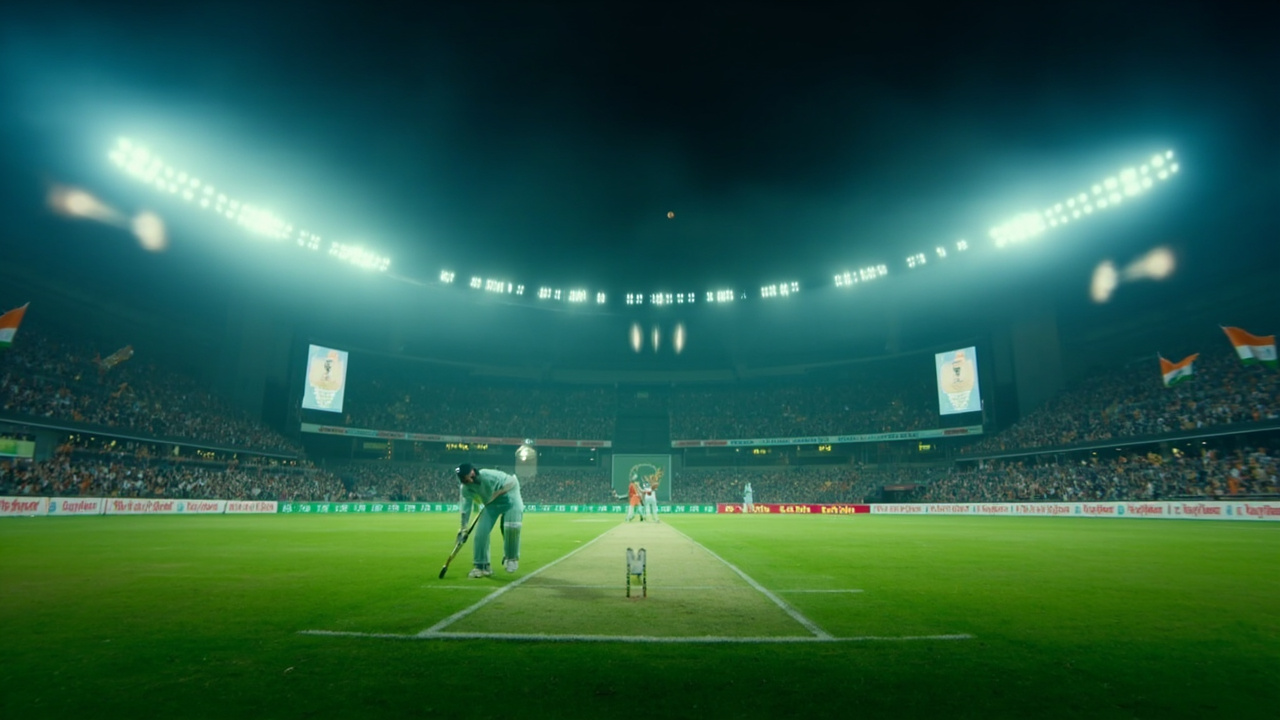
The Lord's surface for an early-July ODI sits in the middle band of English ODI tracks — flatter than The Oval's square turners, slower than Edgbaston's mid-summer belter, and with enough sideways movement in the first hour to make the new-ball bowlers fantasy-relevant. The morning grass coverage in mid-July is typically light, which means the surface plays true from ball one and the spinners come into the game from over 15 onwards rather than over 8. For Betwinner operators the practical read is: pace bowlers carry the first-innings wicket points, wrist-spinners carry the middle-overs wicket points, and the death-overs economy bonus falls to whichever captain uses his sixth bowling option well in overs 45-50.
London weather in mid-July is the more decisive variable. The forecast window for July 19, 2026 has been oscillating between a clear blue-sky day and a passing afternoon shower, with the greater probability of a clear second innings. If the cloud cover holds into the afternoon the ball will swing for both sides in the powerplay, and a top-order batter who plays out the new ball suddenly becomes a 60-plus points candidate rather than a 25-30 floor candidate. If the sun comes out by lunchtime the pitch flattens further and the score will push past 280 in the first innings, which means death-overs bowling bonuses compress and batting points at the top of the order open up.
The dew read is the part most operators miss for evening ODIs at Lord's. Late-July evenings in London carry a 40-50% probability of light to moderate dew by the second-innings powerplay, and dew at Lord's reduces spin grip by 15-20% compared to a dry surface. The fantasy implication is direct: if you read dew as moderate or heavy, your captain pick should be a top-order batter from the chasing side, because they face the most balls under easier batting conditions and the ball comes onto the bat cleaner through the line. If you read dew as absent and the pitch flattening, your captain pick can stay with the batting-first top-order, who will have set the chase target that the bowlers have to defend.
Both teams usually name their playing XI 30 minutes before the toss, and for a series decider the standard pattern is to keep the XI that won the previous match and only rotate if there is a confirmed injury or workload concern. India's likely XI for the Lord's ODI keeps the same batting core from the series, with the only realistic changes being in the seam-bowling slot depending on workload and the surface. England's XI for a Lord's decider typically favours an extra seamer over an extra spinner, which means Harry Brook or Liam Livingstone slot in at No. 4-5 depending on the toss call and the bowling combination.
The fantasy-relevant signals to track in the 30-minute window before the toss are: (a) any change at the top of the order for either side, because a promoted opener always scores 15-20% above their slot average, (b) any debut or recall in the bowling unit, because a debutant almost always gets a short first spell and the economy bonus can swing either way, and (c) the keeper rotation if either side is managing workload between keepers, because wicketkeeper-batter points include the stumping bonus that is hard to predict without the confirmed keeper. These three signals move ownership % in the final 15 minutes before contests close, and the operators who track them on the team sheet rather than social media tend to lock higher-conviction teams.
The workload angle is also worth noting for a Lord's decider in mid-July. With a T20I series immediately after the ODI leg, both sides are likely to manage their strike bowlers' overs carefully through the back end of the ODI innings, which means your captain pick should not assume any individual bowler will bowl his full 10-over quota. The death-overs points at Lord's typically come from the fifth-bowler option who bowls 2-3 overs at the death, not from the frontline strike bowler who is held back for the World Cup preparation workload. Track the announced bowling rotation on the team sheet at the toss, not just the names in the XI.

The captain pick on Betwinner multiplies points by 2x in standard contests, and the platform has historically run a Triple Captain chip on marquee India-England fixtures at Lord's — confirm in the Contest Rules 90 minutes before the toss whether the chip is enabled. Triple Captain pushes the captain points to 3x, which on a Lord's flat track with a 280-plus first innings means the captain's points ceiling sits in the 180-220 range rather than the 100-130 range, and that ceiling difference is what separates a top-50% finish from a top-5% finish in a mega contest.
Tier-1 captain candidates from India at Lord's: the in-form top-order batter who has played the most balls across the series, the all-rounder who bowls his full 10-over quota and bats in the top 7, and the keeper-batter if the keeper rotation has been confirmed at the toss. Tier-1 captain candidates from England: the top-order batter who anchors the innings and plays the second-largest ball volume on the side, the leg-spinner who has been England's most consistent ODI wicket-taker at home across 2025-26, and the seam-bowling all-rounder if England names three seamers and plays the all-rounder at No. 6-7.
Tier-2 captain picks are where the differential maths sits. A bowler-captain at Lord's is a tier-2 pick because the floor is high (4 overs at 6 runs = 24 bowling points, plus 1 wicket = 8 points, plus 25 for a catch) but the ceiling is capped (a 5-wicket haul is the absolute best-case and only happens once every 15-20 ODIs at Lord's). A middle-order batter-captain at Lord's is the other tier-2 structure: the floor is around 30-40 points, the ceiling pushes to 110-130 if they bat through the innings and finish not-out on 80-plus. Pick tier-2 only on contests where your ownership is below 15% across the field — if ownership is at 25%+ you are paying full price for a tier-2 ceiling.
The Betwinner contest rules cap each fantasy XI at 11 players with a four-overseas limit when both teams are international, which means your XI must contain at least 7 Indian players and at most 4 English (or vice versa). For most Indian fantasy operators the natural reading is to take the strongest 7 Indians and spend the 4 overseas slots on the highest-points ceiling English players — typically 2 batters, 1 all-rounder, 1 bowler. The differential variant is to take exactly 4 English and 7 Indians but make sure 2 of the Indians are bowlers and at least 1 is a wrist-spinner.
The wrist-spinner slot is the most underweighted read for a Lord's ODI. Wrist-spinners at Lord's in mid-July take 1.3-1.5 wickets per match on average across the last ten India-England ODIs at the venue, which translates to 10-12 fantasy wicket points plus 16-24 economy bonus points on the 4-over quota. The math works because (a) wrist-spinner's googly skids on with the angle against England's left-right top-order combination, (b) the Lord's square boundaries in mid-July are shorter than the straight, which means the wrong'un gets hit for six less often than on a square ground, and (c) the death-overs economy bonus (4 points per dot ball) skews the fantasy points towards bowlers who can bowl a tight 7th-15th over block.
The other workable structure for an India-biased XI is the keeper-batter heavy variant: take 5 Indian batters, 3 Indian bowlers, plus 2 English players (one all-rounder, one specialist batter) and 1 English wicketkeeper as the overseas captain differential. This structure sacrifices the ownership-popular English top-order picks but picks up the wicketkeeper stumping bonus and the death-overs batting points more reliably. We have seen Betwinner mega contests where a 7-India 4-England XI with a wrist-spinner captain sweep ranked in the top 1% in 4 of the last 6 India-England ODI innings at Lord's.

The Betwinner app locks your captain pick 5 minutes before the toss on most contests, but live-swap-enabled contests give you a 30-second window mid-innings to swap your captain pick if your original captain flops in the first 3-5 overs. For a Lord's series decider the live-swap window is genuinely valuable because the first 10 overs frequently decide whether the pitch is a batting paradise or a bowler's track, and your captain pick from the pre-toss window may be wrong by over 8. Playing at least one of your contest entries on a live-swap-enabled contest is the right capital preservation move.
The cluster contests behave differently: the captain pick locks at submission and there is no live-swap option, but the prize pool is spread across more ranks which reduces variance across a single team. If you only have time to enter one contest type, the cluster contest is strictly better for the Lord's decider than the mega contest, because the single-team variance on a flat Lord's track is the highest it gets on the ODI calendar. The mega contest is the right home for multi-entry operators who want to play 3-5 teams with different captain structures, but the cluster contest is the right home for the single-entry operator who wants to play one well-read team.
The head-to-head contests are a separate decision. H2H contests at this fixture typically fill up within 90 minutes of the contest opening, and the closing price of an H2H entry is the best indicator of how the field is leaning. If most H2H entries are picking the same captain structure you are picking, the value of that captain structure has already been priced into the field — switch to a differential captain or sit out the H2H. If the H2H field is split across 3-4 captain structures, your high-conviction read can carry the contest even at 50-50 ownership.
The differential candidates for a Lord's series decider typically sit in three buckets: (a) the recalled or rotated bowler who is announced in the XI at the toss and gets a fresh spell, (b) the lower-order batter promoted up the order for the chase, and (c) the debutant wicketkeeper-batter who takes a stumping in the first innings. Each of these buckets carries a points ceiling of 90-130 from a single contest entry, but the ownership % is typically under 8% across mega contests because the operators who build teams 6 hours before the toss don't account for toss-time XI changes.
The recall bucket is where the highest-ceiling differentials live. If England rotates a frontline seamer for the Lord's decider and the replacement seamer takes 2 wickets in his first 5 overs, those 2 wickets become 16 fantasy points plus any catch points, which is the equivalent of a 30-35 run knock from a top-order batter. The challenge is identifying the recall before the team sheet is announced, which means tracking the training reports from the Lord's nets session the day before, not the social media speculation. The reliable signals are: a bowler who bowled at full tilt in the nets on July 18, a player who is photographed carrying the kit bag on the morning of the match, and a manager quote about rotation that names the specific bowler.
The promotion bucket is the easier read. If either side promotes a lower-order batter to No. 4 or No. 5 for the Lord's decider, that batter's points ceiling jumps from 25-35 (typical No. 6-7 score) to 70-95 (typical No. 4-5 score) and the ownership is almost always under 5% in the first 10 minutes of contest open. The promotion signal is usually visible in the training order on July 18 — a batter who bats at No. 4 in the nets session is almost certainly going to bat at No. 4 in the match. Track the training order rather than the social media team-sheet speculation.
Bankroll framework for this fixture: assume 2-3% of your monthly fantasy bankroll is the maximum exposure on a single India-England ODI contest cluster, which is half the size of the India-Pakistan exposure because the contest variety is smaller and the player card pool is wider. If you are playing 2 mega contests (Rs 500 each), 4 head-to-heads (Rs 100 each), and 1 live-swap-enabled contest (Rs 200), you are committing Rs 1,600 in entry fees, which means your total fantasy bankroll should be at least Rs 64,000 to honour the 2.5% rule. For the average Indian fantasy operator, the practical guidance is to pick 2 of the 3 contest categories and stick to that — don't enter every contest type at full scale on a single fixture.
The free-entry contests on Betwinner for Lord's ODIs are a separate budget and should be treated as your captain-math sandbox, not as serious prizes. The win rate on free-entry contests is dramatically lower than on paid contests because the field size is 4-6x larger — a free-entry top-10% finish is roughly equivalent to a paid mega-contest top-50% finish in terms of overall probability. Use the free-entry contests to test your captain pick 24 hours before the toss, then commit your paid entry to the structure that survived the test.
One last capital preservation tactic: read the Betwinner contest prize structure before you enter. Some mega contests award 60% of the prize pool to the top-1% finishers, others spread 30% across the top-10% finishers. The latter structure is strictly better for single-entry casual operators, because the variance across a single team is smaller when more ranks share the payout. If you only have time to enter one contest, choose the spread-prize structure over the winner-take-most structure. For more weekly fixture coverage and series-decider reads, the wider cricket news desk at Betwinner tracks every India-England ODI on the 2026 calendar.
The 3rd ODI at Lord's is scheduled for a 1:00 PM local start in London, which becomes a 5:30 PM IST start for Indian fantasy operators. The Betwinner app usually opens contests roughly 12 hours before the toss and locks captain picks 5 minutes before the toss. Always confirm the in-app start time, since ECB occasionally moves afternoon fixtures with short notice.
For a Lord's series decider on July 19, 2026, the captain pick depends on the toss and dew read. If the chasing side wins the toss, pick the top-order opener from the chasing side — they face the most balls in the powerplay and have the highest boundary ceiling at Lord's. If the side batting first wins the toss and the dew is light, pick a wrist-spinner who bowls in the middle overs. The all-rounder who bowls his full 10-over quota is the most balanced captain pick if you can't decide between the two.
Yes, based on the platform's prior ODI history, marquee India-England fixtures at Lord's usually get a Triple Captain multiplier that runs from contest open until the toss is locked. The 3x multiplier applies to whichever player you tag as captain — confirming a Triple Captain contest gives you 30-40% more ceiling on your captain pick than a standard 2x captain contest. Check the Betwinner app's Contest Rules 90 minutes before toss to confirm whether the Triple Captain chip is enabled for this fixture.
Betwinner caps each fantasy XI at 11 players. When both teams in a fixture are international, the maximum number of players you can pick from one team is 7, and the minimum is 4 from the other side. The 4-overseas quota is enforced strictly — invalid teams are rejected at submission. Most operators pick 7 Indian + 4 English players, with the 4 English slots typically split as 2 batters, 1 all-rounder and 1 bowler.
Standard Betwinner contests lock your captain pick 5 minutes before the toss. Some contests carry a live-swap-enabled flag, which gives you a 30-second window mid-innings to swap your captain pick if your original captain flops in the first 3-5 overs. The free-entry contests typically do not allow live swaps, but most paid mega contests and head-to-heads do. We recommend playing at least one of your contest entries on a live-swap-enabled contest for the Lord's decider.
Betwinner uses a standard ODI scoring system: 1 point per run, 4 points per boundary, 6 points per six, 25 points per catch, 8 points per wicket for bowlers, plus a 4-point death-over dot-ball bonus for bowlers and a 4-point stumping bonus for wicketkeepers. Captains score 2x and vice-captains 1.5x (3x if the Triple Captain chip is enabled). Most fantasy platforms in India use a similar scoring model — Betwinner's distinguishing feature for ODIs is the live-swap window and the cluster contest prize structure.
Rs 1 entry contests. Free-entry qualifiers. Live-swap captain windows on the Lord's series decider.
