Daren Sammy expects West Indies Test captain Roston Chase to be available for the Pakistan opener in Tarouba from 25 July 2026, even with residual swelling in the right index finger that kept him out of the New Zealand ODIs.
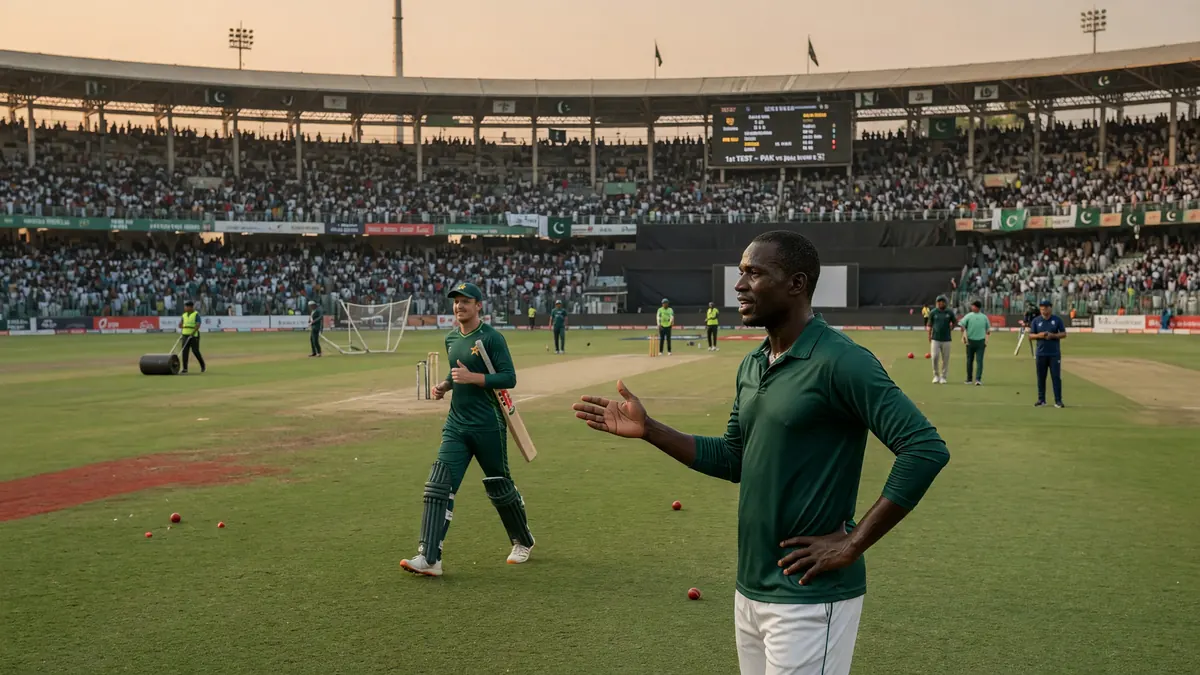
· BetWinner News Desk · Cricket News
West Indies head coach Daren Sammy said Test captain Roston Chase is expected to be fit for the first Test against Pakistan, which begins on 25 July 2026 in Tarouba. The update arrives days after Chase sat out West Indies' recently finished home ODI series against New Zealand because of an injury to his right index finger.
Sammy framed the situation as managed rather than open-ended. He told reporters he had spoken to Chase the same day, that the all-rounder had completed a workout, and that the finger was still a little puffy. The lingering swelling is real, but the coach's language pointed toward availability for the red-ball assignment rather than a delayed fitness race.
For a side shifting formats in a short window, that distinction matters. Chase is not only a middle-order batter and off-spin option; he is the appointed Test captain. Clarity on his hand reduces the risk of a late leadership change before the Pakistan series begins in Trinidad.
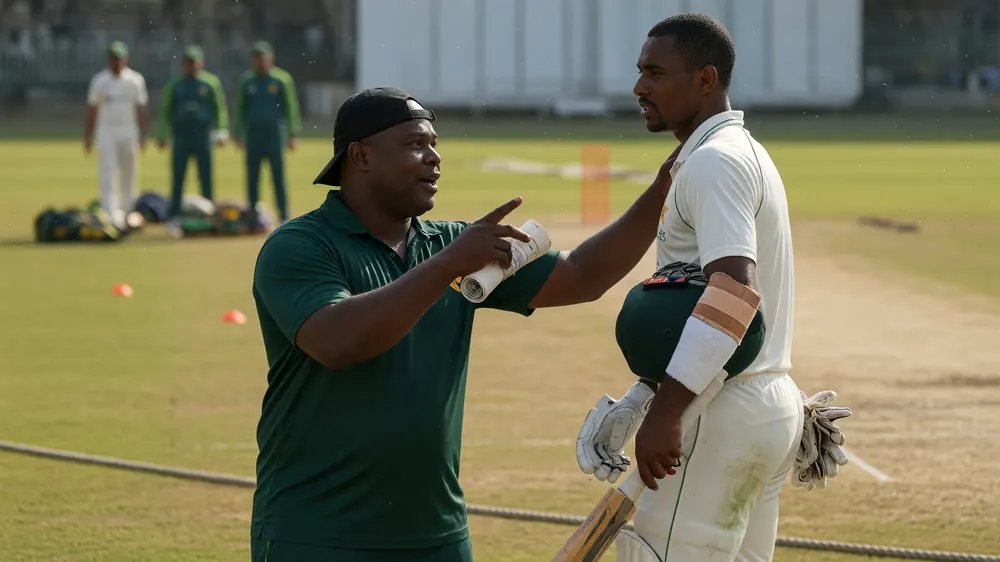
Sammy's public comments stayed practical. After confirming the same-day conversation and the completed workout, he described Chase as a fighter who would not want to miss Test cricket. He also placed trust in team physio Dr Denis Byam, saying he was pretty sure Byam had a way of keeping players available and that Chase would be ready for the first Test.
Those remarks do not amount to a full medical bulletin. There was no detailed timeline on grip strength, no public scan result, and no guarantee that bowling workload will be unrestricted from ball one. What they do establish is the coaching staff's working assumption: residual puffiness is being managed inside the medical plan, and the captain is expected to take his place when the Test starts in Tarouba.
Readers should separate expectation from certification. Sammy's confidence is attributable and current as of the ICC report on 22 July 2026. Final confirmation still belongs to the match-day medical sign-off and the team sheet. Until then, the most accurate reading is "expected ready," not "formally cleared in writing for unlimited overs."
West Indies host Pakistan in a two-Test assignment under the ICC World Test Championship 2025-27. The first Test is scheduled for 25-29 July 2026 in Tarouba. The second Test is scheduled for 2-6 August 2026 in Port of Spain.
That calendar leaves little buffer after the New Zealand white-ball series. Chase missed the entire ODI set with the finger issue, so his preparation for Tarouba has been different from teammates who played five 50-over matches. Net volume, throw-downs, and bowling through the full action become the practical checkpoints in the final training days rather than recent international match minutes.
A two-Test home block also compresses selection risk. If Chase starts in Tarouba and the finger settles, West Indies keep continuity into Port of Spain. If swelling flares under match load, the staff would face a mid-series captaincy and balance decision with only a short gap between Tests. Sammy's early public confidence is aimed at avoiding that uncertainty before the first toss.
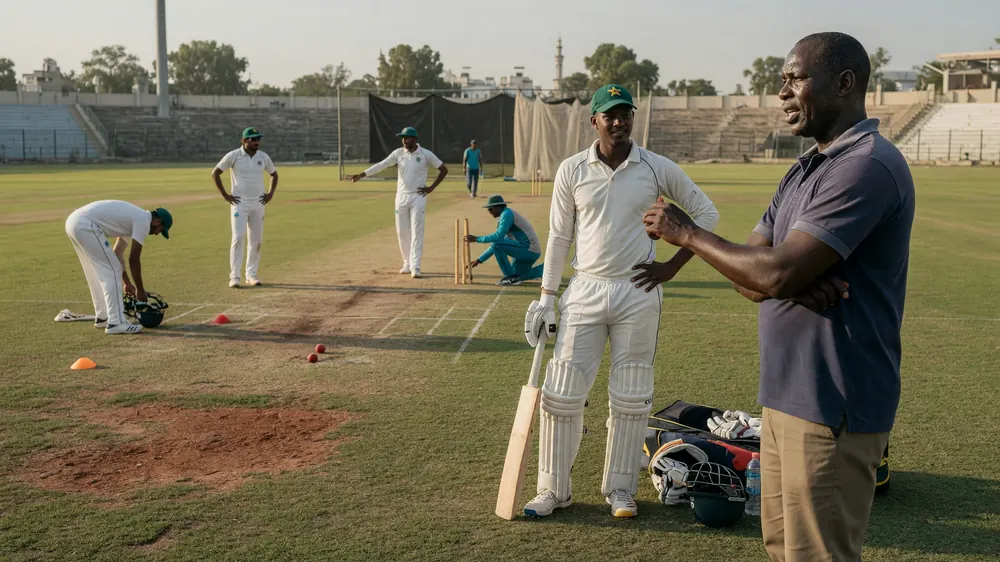
Chase's value in Test cricket sits across three columns: runs in the middle order, overs of off-spin, and on-field leadership. A right index finger injury touches all three. Grip on the bat handle, revolutions on the off-break, and even the simple act of repeated catching in the cordon can aggravate residual swelling if load is mismanaged.
That is why Sammy's reference to Byam carries weight inside the quote. Availability for a five-day match is not the same as availability for a quick middle-order cameo in a chase. Test cricket asks for repeated skill under fatigue. The coach's message was that the medical group believes those repeated actions are within reach by 25 July.
If Chase plays and bowls a full share, West Indies retain a familiar balance with a batting all-rounder who can break partnerships. If he plays primarily as a batter-captain with capped overs, the bowling plan has to absorb those overs elsewhere. Sammy did not spell out a capped-overs scenario; he projected readiness for the first Test. Selection watchers should still track how many overs Chase bowls in the final warm-up sessions as the cleaner public signal.
West Indies lost the New Zealand ODI series 3-2 at home before turning to the Pakistan Tests. The white-ball result leaves a mixed dressing-room mood: a series defeat, yet a competitive scoreline and a winning finish in the finale rather than a collapse through the full set.
In Championship terms the stakes sharpen. West Indies sit eighth in the World Test Championship standings. Pakistan are at the bottom of the table. Neither side arrives with surplus points room. A home pair of Tests against a side also hunting recovery is exactly the kind of block that can move a mid-table or lower-table ledger quickly, for better or worse.
Sammy's public focus on Chase's fitness fits that context. Leadership continuity is one of the few controllable edges before a ball is bowled in Tarouba. The coach is trying to lock that variable early rather than carry a captaincy question into the match week headlines.
Chase's absence from the New Zealand ODIs means West Indies evaluated white-ball leadership and balance without their Test captain in the XI. That separation can be useful in one sense: the ODI group settled its own combinations while the medical staff worked on the finger away from match-day noise. It also creates a knowledge gap. Chase returns to an international environment that just played five matches he did not share, including the pressure of a home series that finished 3-2 to the visitors.
Sammy did not present that gap as a crisis. His comments stayed on Chase's same-day workout and the expectation of readiness for Tarouba. The practical implication is that any match sharpness Chase carries into the first Test will come from training intensity and prior red-ball habits rather than recent ODI minutes. For a five-day contest that trade-off is often acceptable; for bowling rhythm specifically, the staff will still want evidence in the nets that the finger tolerates repeated off-breaks and fielding loads.
While the Chase update dominated the fitness conversation, Sammy also spent time on 19-year-old left-arm wristspinner Vitel Lawes. Lawes was a surprise ODI call-up after impressing at the ICC Men's Under-19 T20 World Cup earlier in 2026. Against New Zealand he took eight wickets in five matches.
Sammy said he was proud of what Lawes had done. He stressed that the selection was not a sentimental gamble, pointing to internal processes used to fast-track the young spinner's development. After the series he highlighted Lawes looking like he belonged, especially while the side tries to develop players.
Those comments matter for the Test series only indirectly. Lawes' ODI body of work does not automatically translate into a red-ball XI, and Sammy was reflecting on the white-ball campaign rather than naming a Test debut. The useful signal is cultural: the coaching group is willing to back young specialists when the process supports the call, and it is prepared to defend that call publicly after results arrive.
Sammy also addressed Shimron Hetmyer and Sherfane Rutherford after their contributions in the ODI series finale. In a chase of 269, Hetmyer scored 69 not out and Rutherford made 64 as West Indies closed the series on a high. The coach was pleased with the talent on show, then immediately returned to the harder theme that has followed both batters: consistency.
He asked, in substance, why performances of that quality are not more regular, and described a constant battle over when consistency arrives and when opportunities should stop. He also admitted the talent makes it difficult to leave them out. That is a coach holding two truths at once — valuing match-winning returns while refusing to treat one strong chase as a finished argument.
For the Pakistan Tests, those ODI knocks are form evidence, not selection commandments. Red-ball roles, surfaces in Tarouba and Port of Spain, and the balance with Chase's own batting slot will decide who owns the middle order across five days. Sammy's remarks simply show the internal standard he is applying as the squad switches formats.
Between this fitness update and the first morning in Tarouba, the verifiable checkpoints are narrow and concrete. Watch whether Chase completes full bowling spells in the remaining sessions, whether the medical staff issue any fresh restriction language, and whether the captaincy is treated as settled in official team communications. Sammy's current position is clear: he expects Chase ready for the first Test, with Byam managing the residual swelling.
Everything beyond those points is speculation. There is no public confirmation yet about Pakistan's XI, pitch behaviour in Tarouba for this fixture, or exact overs limits for Chase. The confirmed picture remains simple: the West Indies captain missed the New Zealand ODIs with a right index finger injury, trained through residual puffiness, and has his coach's public backing to lead the WTC home assignment beginning 25 July 2026.
The second Test in Port of Spain from 2-6 August then becomes the continuity test. If Chase gets through Tarouba without a setback, West Indies carry a stable leadership core into the second match of the block. For ongoing West Indies and Pakistan series notes from the same desk, see the latest cricket news coverage on BetWinner.
Series dates, fitness notes and selection signals as the Tarouba Test approaches.
